

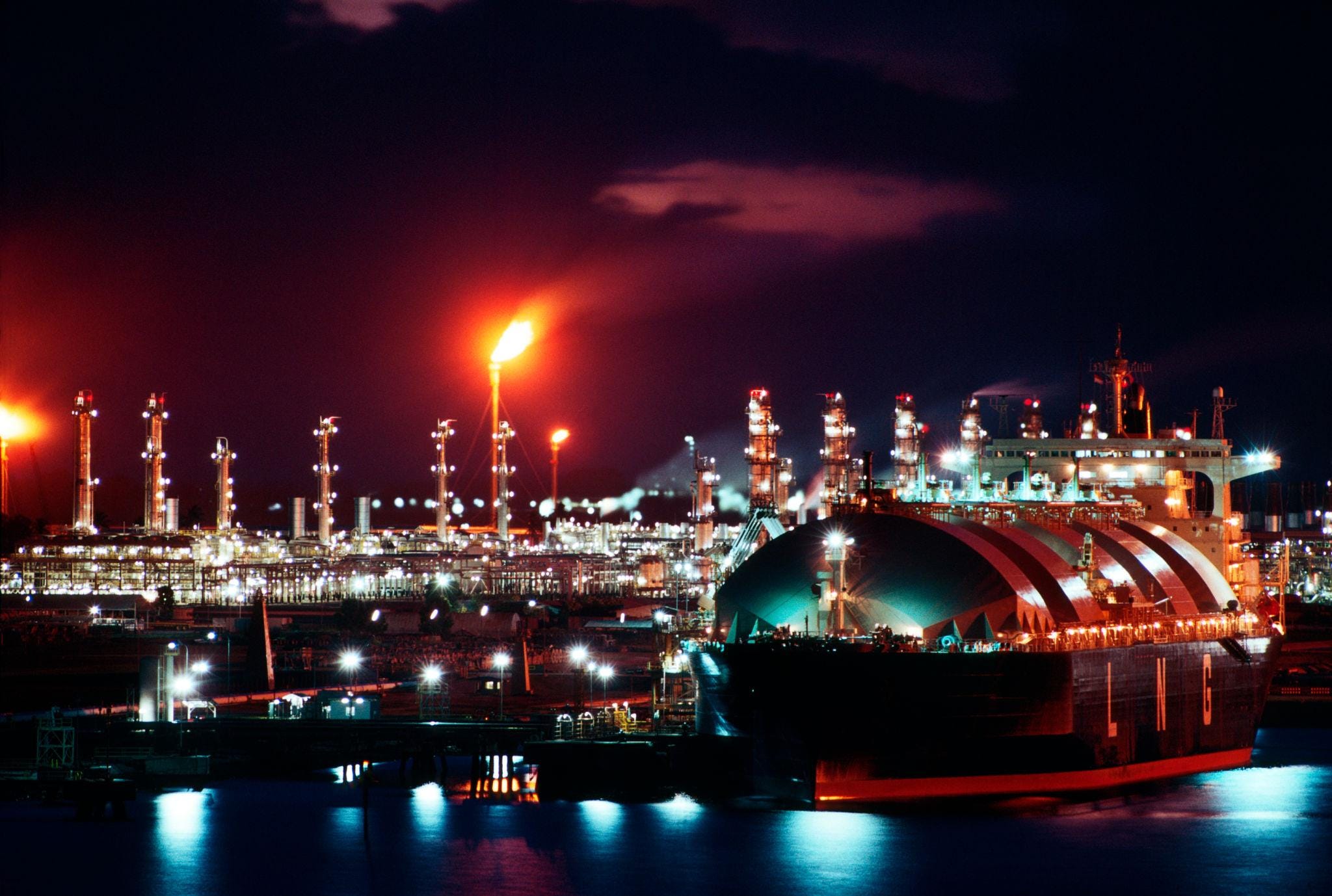
Canberra is weighing a radical shift in how it taxes gas, with proposals for a flat 25 per cent levy on export revenue now in play. The Senate has established a select committee to examine it. Into that debate steps Bill Johnston, former Western Australian Minister for Mines, Petroleum and Energy, who has lodged a submission drawing on direct experience in a state where gas underpins both industry and domestic supply. He stands out as the clearest voice of reason amid a welter of submissions to the inquiry. Those pushing hardest for the gas tax are often the same voices calling for an end to all fossil fuel use; this committee is their stalking horse.
Here is the Hon Bill Johnston’s submission in full and it is reproduced with his permission.
Key Issues
1. Gas resources can only pay taxation revenue if they are operating.
Policies and actions to prevent the production of natural gas will have the effect of preventing the collection of tax revenue.
2. Australian gas producers pay significantly more company tax than information technology companies, such as Atlassian
3. The Petroleum Resources Rent Tax (PRRT) is a Commonwealth scheme that applies to oil and gas resources extracted from off-shore, in Commonwealth waters.
This means that it does not apply to (for example) Queensland LNG producers
Much analysis of the taxation of the gas industry in Australia is deeply flawed and lacks rigour because it compares taxation in a unitary nation (such as Norway) with only the tax paid to the Federal Government, despite Australia being a Federated country
4. The PRRT scheme was developed contemplating oil production, not LNG projects
The PRRT is a tax on project profits, not on project revenues
In the 1970’s and 1980’s, when the concepts behind the PRRT were being developed and implemented, the LNG industry was in its infancy, so it is not a surprise that the authors didn’t consider the LNG sector in detail
Applying the PRRT to LNG projects – which have much higher up-front capital costs, much longer project cycles, and lower returns on capital invested when compared to oil projects – was always going to delay Government revenue receipts compared to an ad-valorem royalty scheme
Calculations of the share of revenue collected by the PRRT from any specific project will only able to be made at the conclusion of the project, and certainly not in the project’s start-up phase
5. In my view, the National Offshore Petroleum Titles Authority (NOPTA) has not managed its responsibilities in Australia’s best interests.
NOPTA is the “other side of the policy coin” to the PRRT – in the absence of an Australian National Oil Company, NOPTA is tasked to ensure projects come to market in a timely manner
In my view, NOPTA’s commerciality tests have not been correctly applied
I argue that NOPTA has allowed the “warehousing” of gas resources that should have been developed via existing domestic-only gas facilities (for example, Varanus Island, Devil’s Creek and Macedon)
Given the legal framework of Australia’s offshore title scheme, it would take about a decade for NOPTA to apply its commerciality test to a specific lease, then refuse a retention lease, and for that particular gas lease to become available to other potential developers, and finally come into production
6. Gas resources extracted in the jurisdiction of the States (including the supplies to Queensland LNG facilities) are taxed by the States through State-based royalties.
It is not clear to me what information will be available to this brief inquiry that would allow it to make meaningful recommendations for action by the States, who own, manage and tax the resources independently of the Australian Parliament
7. In reference specifically to comparisons of the revenue arrangements between Australia and Norway , these comparisons usually ignore a number of structural differences (in addition to those issues noted above):
Norway has a national oil and gas company (Equinor) that has an equity stake in projects in Norway, and is the operator in most projects
In the 1970’s and 1980’s, Australia chose to allow the private sector to carry the risks of exploring for, and developing, off-shore oil and gas resources, instead of using taxpayers’ money through a National Oil Company to do that task
It is my view that Australia did not make the right decision at that time, but the moment for that decision was 1979, not 2026
Norway has embraced carbon capture, use and storage as a key climate mitigation strategy.
This is consistent with the Intergovernmental Panel on Climate Change’s recommendations, not an attempt to prolong hydrocarbon production
Norway requires its gas resource to be exported
It is not just that Norway has no domestic reservation policy, but rather their policy is to export their gas reserves for use in other countries
Norway’s oil and gas revenues are not used in the Government’s annual budget
All of Norway’s oil and gas revenues are placed in a sovereign wealth fund, and it is the earnings on the fund that are applied to the budget.
It took decades for Norway to build its sovereign wealth fund to a significant size, and during all of that time their oil and gas revenues did not contribute to budget expenditures
It is certainly arguable that Australia should have placed our oil and gas revenues in a sovereign wealth fund, but we did not do that
Had we done so, between the 1980’s and today, Australia would have had less tax revenue to spend on social services
8. On 30 November 2009, the Australian Greens political party combined with then Opposition Leader Tony Abbott’s Liberal Party, along with the National Party and the Family First Party, to prevent the introduction of carbon pricing to Australia
If the Australian Greens political party had supported a carbon pricing scheme in 2009, the oil and gas industry would have significantly reduced their carbon emissions by now, or would have supported significant carbon offsets by others, or would have had to pay significant penalties to the Australian Government
This Committee might want to report on what our nation has missed out on because of the Australian Greens political party’s grubby deal with Tony Abbott
9. Australia’s LNG exports support the global effort to achieve net zero emissions, and are entirely consistent with The Intergovernmental Panel on Climate Change reports and recommendations, as well as all of Australia’s international climate obligations
All countries that buy LNG from Australia have their own net-zero commitments
I view it as a colonial attitude for Anglo-Australians to argue that Asian countries (such as Japan, Korea, China and Singapore) can’t chose their own pathway to net zero
While the Australian LNG industry must deal with its Scope 1 and Scope 2 emissions, all of the Scope 3 emissions of Australian LNG exports are included in the net zero pathways of our trading partners
Our LNG import partners have all publicly stated that they require LNG for the next 30 years in order to achieve their net zero outcomes
10. In considering our energy trading partners, we need to particular look at Japan.
Japan was a significant importer of Russian LNG prior to Russia’s illegal invasion of the Ukraine.
Japan switched off those arrangements, to support collective action against Russia, and is seeking LNG from other countries to replace that lost supply
It is clear that Russia would like Australia to reduce our LNG exports, because that would suit the political interests of President Vladimir Putin
Japan has increased its reliance on Qatar for LNG, and the consequences of that is clear to see at the moment
It is possible that Japan will agree with President Donald Trump’s request and seek additional LNG supply from either:
new US LNG production in Alaska, or
LNG from the US Gulf of Mexico suppliers, who utilise fracked shale gas as their feedstock
However, maintaining Australian LNG supply to Japan (or even increasing the supply if that is possible) is clearly a better outcome,
for Australia’s national interests,
for our Japanese energy partners, and
for the global environment
11. Almost 50% of all domestic gas demand in Australia occurs in Western Australia
Western Australia needs to resolve its own supply challenges
Domestic gas supply needs to at least match, and preferably exceed, domestic demand
The Australian Energy Market Operator’s WA Gas Statement of Opportunity makes it clear that
It is rising demand, not supply constraints, that lead to domestic gas shortages prior to 2032
Beyond 2032 there are dramatic supply declines, principally caused by the end of offshore domestic-only projects, not LNG exports
It is physically not possible for an offshore LNG project to supply domestic gas if it does not have a domestic gas plant and if it is not connected to domestic pipeline infrastructure
This means Prelude and Itchys can’t supply domestic gas to Western Australia, and their LNG exports can’t impact domestic gas supply
The Pluto 1 LNG facility was also built without a domestic gas plant,and while the Pluto/North West Shelf interconnector does allow some domestic supply, Pluto 1 has not “reduced” its domestic supply
This situation is not how I would want the projects to have been built, but is an unarguable fact ,and goes to the heart of the dishonest argument about Western Australian LNG exports being at the expense of domestic supply
It is completely impractical to pipe natural gas from Western Australia to Australia’s east coast
In the same way that Western Australia needs to solve its supply challenges, the East Coast gas market needs to resolves its supply problems, too
Restricting the production of natural gas, by definition, contributes to supply shortages
How anyone can oppose increasing supply of natural gas and at the same time complain about a lack of supply defies logic
12. By definition, a domestic gas reservation policy is contingent on LNG exports
If you are not exporting LNG, by definition there is nothing to reserve
Western Australia’s domestic gas reservation policy only works because there are LNG exports, and the gas for export is coming from Commonwealth waters
13. In Western Australia, the North West Shelf, Gorgon and Wheatstone LNG projects have domestic gas plants, and this domestic gas production is the cornerstone of Western Australia’s domestic gas supply.
Without these LNG projects, Western Australia would have significantly less supply of domestic gas and we would be in energy crisis
14. In Western Australia, generating electricity is not the main use of domestic gas
This means that Western Australia’s work to massively increase the use of renewable electricity does not significantly reduce the demand for natural gas
15. Much of the natural gas that is used in Western Australia is used as feedstock for, or as a reagent in, manufacturing
It is sometimes technically impossible, and in other cases extremely difficult, to use renewable energy in these production processes
Unless we ensure that imported products meet the same high standards as are required of Australian industry we will be increasing impacts on the global environment if we stop this domestic manufacturing
16. The largest demand for natural gas in Western Australia is our mining and mineral processing industries
The welfare of every Australian is linked to the export of minerals by Australia, from Western Australia, as well as from every other State and the Northern Territory
A move to renewable energy means the demand for global minerals is increasing
Electric vehicles require many times more minerals than traditional vehicles that use internal combustion engines, also increasing the demand for minerals
The processing of critical minerals (such as converting lithium spodumene into lithium hydroxide) requires process heat that cannot currently be provided by renewable technologies
The processing of rare earths – which are used in wind turbines – also requires natural gas
17. Demand growth for electricity mitigates against reducing the use or Gas-Powered Generation (GPG) in electricity grids
For example, in the South West Interconnected System (SWIS), it is expected that GPG contribution to overall supply of electricity will fall from approximately 35% in 2018 of supply to about 20% of supply in about 2030
However, if demand for electricity in the SWIS increases by three times by 2040 (as is predicted in the Whole of System Plan), then the use of natural gas for generating electricity will increase
Unless demand for electricity remains stable, achieving 80% renewable generation does not, by itself, reduce demand for natural gas.
Moving to high levels of renewable electricity generation is an important goal, but it does not by itself prevent increasing gas demand
18. The Pluto 2 LNG project is building a domestic gas plant, and their largest domestic customer is Perdaman
At $7 billion, Perdaman is Australia’s largest ever manufacturing investment
Perdaman will produce fertilisers and urea, which are essential to global sustainability
The war started by the United States in the Middle East has reminded everyone in Australia that Perdaman’s proposed products are essential to our nation
It is shocking to think that there are people and organisations who have lobbied against the Scarbough gas project, which feeds into the Pluto 2 facility, that will supply Perdaman
Unbelievably, many of the people who opposed the Scarbough and Perdaman projects do not campaign against importing fertiliser or urea from the Middle East and China
This means these campaigners are applying different sustainability criteria to Australian industry than they apply to overseas producers
Middle East countries are not democracies, and neither is China
Further, China produces fertiliser and urea from coal, which creates more greenhouse gas emissions than will be the case for Perdaman
19. The Browse project is essential for domestic gas supply in Western Australia beyond 2030
Without Browse, Western Australia will have a shortage of domestic gas, which will impact the standard of living of everyone in Australia – not just those of us who live in Western Australia
Because the Browse project is so large and complex, the project can only proceed with LNG exports
Browse LNG exports will be to countries that have commitments to net zero carbon emissions, as outlined above, and
Browse will not increase Australian LNG exports (and therefore not increase our Scope 3 emission) as the gas will be processed using the existing North West Shelf LNG facilities
Browse LNG production replaces current LNG production, it is not additional LNG production
If processed at the North West Shelf, LNG exports from Browse are not in opposition to domestic supply - they create the opportunity for domestic supply
There are no circumstances in which the Browse project can proceed by supplying domestic demand alone
The continued operation of the North West Shelf LNG facility as part of the Browse project is accommodated within Australia’s existing net zero pathway
Because of the size and complexity of the Browse to North West Shelf project, for the supply of domestic gas to be available shortly after 2030, final approvals need to be granted within a very short period of time, probably this year
Opponents of the Browse project must explain exactly where the supply of domestic gas will come from, and why the project they support is more environmentally acceptable than the Browse project
20. It is in Australia’s national interest, and in the interests of all Australians, that Australia has adequate supply of natural gas.
In Western Australia, LNG exports allow for domestic gas supply, and without LNG exports the multi-billion dollar offshore projects would not exist
LNG exported from Western Australia has never used pipeline gas, and it has never been produced at the expense of domestic gas demand
Western Australia is not currently connected to the East Coast gas pipeline network, and so our LNG exports cannot be “redirected” to the East Coast
Changes to taxation arrangements must have as their first objective the supply of gas, not meaningless ideology
No gas production means no taxation paid by gas producers
No gas production in Australia will mean more dependence on imported products, with no improvement in global greenhouse gas emissions
Selected Bibliography
Australian Senate Hansard, 30 November 2009
https://parlinfo.aph.gov.au/parlInfo/search/display/display.w3p;db=CHAMBER;id=chamber%2Fhansards%2F2009-11-30%2F0008;query=Id%3A%22chamber%2Fhansards%2F2009-11-30%2F0000%22
Intergovernmental Panel on Climate Change Report “Carbon Dioxide Caputre and Storage”
https://www.ipcc.ch/report/carbon-dioxide-capture-and-storage/
Economics and Industry Standing Committee of the Western Australia Legislative Assembly (38th Parliament), “Inquiry into Domestic Gas Prices” (Report 6, 2011)
https://www.parliament.wa.gov.au/Parliament/commit.nsf/(Report+Lookup+by+Com+ID)/7895FF6E76A7CDB74825785D0013F234/$file/DGP%20Report%20%5BFinal%5D%2020110324.pdf
Economics and Industry Standing Committee of the Western Australia Legislative Assembly (41st Parliament), “Domestic Gas Security in a Changing World” (Report 8, 2024)
https://www.parliament.wa.gov.au/Parliament/commit.nsf/(Report+Lookup+by+Com+ID)/27F837EAB987BD9548258B790020F885/$file/20240814%20-%20RPT%20-%20DOMGAS%20FINAL%20updated%20for%20web.pdf
Energy Policy WA – Energy Transformation Taskforce, Whole of System Plan (and related documents)
https://www.wa.gov.au/government/document-collections/whole-of-system-plan
Australian Energy Market Operator Western Australian Gas Statement of Opportunities
https://www.aemo.com.au/energy-systems/gas/gas-forecasting-and-planning/wa-gas-statement-of-opportunities-wa-gsoo
Australian Energy Market Operator Western Australian Electricity Statement of Opportunities
https://www.aemo.com.au/energy-systems/electricity/wholesale-electricity-market-wem/wem-forecasting-and-planning/wem-electricity-statement-of-opportunities-wem-esoo
Department of Climate Change, Energy, Environment and Water Australian Energy Statistics
https://www.energy.gov.au/energy-data/australian-energy-statistics
Equinor (Norwegian National Oil Company) https://www.equinor.com/
An excellent submission! Could our Minister for Energy please read it? Reality is a very sobering thing. I knew very little about gas distribution but Bill Johnston so clearly sets the scene for those who will make recommendations to the Australian Government. I hope they read it with care.
Outstanding and makes it so clear how once again a Treasury et al, either developed initiative or response to political pressure, could create mayhem for one of Australia’s critical revenue earners, let alone our own domestic infrastructure and energy supply capacity.
There really are a lot of well paid idiots hanging around political places, who cannot string 4 of 5 dots together!