


In February 1977 the new economics teacher at Marist College in Canberra decided to make a dramatic entry.
He strode into the fifth form classroom, picked up the chalk and scrawled one word in capitals across the top of the board: stagflation.
He underlined it and turned to explain. This was a new economic concept, designed to describe our times, when high inflation and high unemployment collided. The word was an inelegant blend of stagnation and inflation, and it was a child of the 70s oil shocks.
Why?
Because oil was not just another commodity. It was the master resource that made and moved economies. When the flow of oil was constricted, the price surged and raised the cost of almost everything at once: transport, manufacturing, farming, plastics and food. Prices rose everywhere because the cost of the lifeblood of the modern world had spiked, and the shock ran down every artery and vein.
The constriction of oil supply also slowed the world’s heartbeat. Households had less money to spend after filling the car and paying the bills. Businesses faced rising costs, shrinking margins and weaker demand. Investment stalled, production slowed and jobs were lost.
Economists had long assumed there was a trade-off between inflation and unemployment, captured in a neat model called the Phillips curve. The oil crisis delivered both together. Growth weakened, unemployment rose and inflation surged. The real world broke the model, as it so often does.
With the third Gulf war raging, everything old is new again and a word not discussed outside universities in nearly a half-century is coming back into vogue. The threat is real. The toxic cocktail that could breathe stagflation back into being is being mixed again.
The Treasurer told the audience the oil price was up 80 per cent since the start of the war, “adding upward pressure to global inflation, interest rate expectations and bond yields, while international equity markets and sentiment more broadly have fallen”.
“It means the prospect of inflation peaking in the high 4s or even higher this year is very real,” he said.
The world’s economic heartbeat is slowing and Australia’s already anaemic growth will weaken further. The longer the oil clot lingers, the greater the damage.
On a flying visit to Australia, International Energy Agency executive director Fatih Birol warned world leaders had yet to grasp the scale of the damage done to the “vital arteries of the global economy”.
Birol says his agency calculates that the shock from the Gulf war outstrips the twin oil crises of the 1970s, combined with a cut to gas supplies bigger than the one that followed Russia’s 2022 invasion of Ukraine. The world has lost about 11 million barrels of oil a day, roughly one in every 10 it consumes. And 140 billion cubic metres of gas have evaporated, the equivalent of stripping a major industrial economy’s entire supply out of the global system.
Some of the damage is structural because, in its fight to survive, Iran has bombarded the energy assets of its neighbours. More than 40 oilfields, gas plants and export terminals across the region have been hit.
Even if there were a swift end to the third Gulf war, the world is a long way from turning its oil and gas tap back to anything approaching normal.
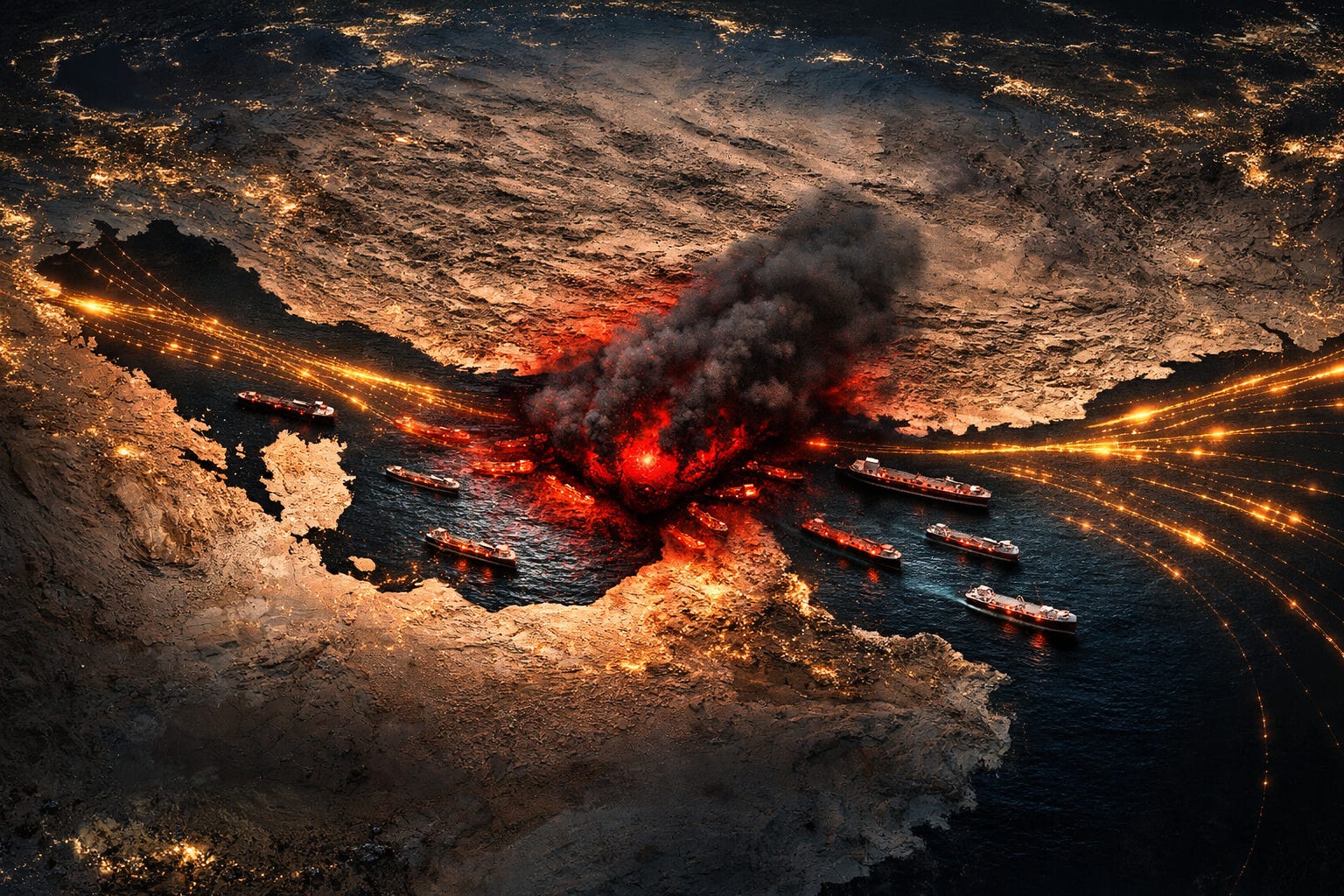
Despite the military dominance of the US and Israel, the choke point of the Strait of Hormuz is effectively controlled by Iran. Trade through that waterway now depends on what the bloodied, battered but still unbowed theocratic regime will allow. Even if an agreement to open it were reached tomorrow, trade would take months to normalise.
But you cannot export oil and gas you do not have.
The Economist reported this week that Brent crude, at $US112 a barrel, is 54 per cent higher than before hostilities began. Gas prices in Europe are up by 85 per cent and the damage will not end when the shooting stops. Ships are in the wrong place, insurance has been shredded, production has been cut and refineries that have gone idle cannot be flicked back on like a light switch.
Restoring energy flows is a long industrial relay. Gulf producers must bring damaged or idled output back online. Tankers must be willing and able to return. Refiners in Asia and elsewhere must restart plants that have been starved of crude. None of that happens quickly. Some liquefied natural gas plants, such as Qatar’s Ras Laffan complex, will take years to recover. Even under the best case, The Economist says it could take around four months for markets to regain some semblance of normality.
Each day Australia wakes up to the reality that oil and gas do far more work in our economy than most people realise. Rising costs are already feeding through to everyday goods. Building materials are climbing sharply as the price of oil-based goods rises. The spike in transport and production costs are moving through the food chain and that will soon be felt at the checkout.
That is how a war in the Gulf turns up in suburban Australia. Not just at the bowser but in the cost of building a home, fixing a pipe or filling a shopping trolley. Hydrocarbons are everywhere; if they do not help make a good, they move it. When their supply is choked, inflation spreads like wildfire.
The pain could get a lot worse. The biggest risk is that the steady flow of more than two vast oil tankers a day is interrupted. If that happens, Australia would be forced into fuel rationing, as others already have. So far the chain has held but the links are straining and the longer the crisis lasts the greater the risks that one will break.
It is worth repeating that it is a national disgrace that a generation of politicians, of all colours, has allowed this country to reach a point where 90 per cent of its liquid fuel is imported. Worse, they assumed the supply lines would never fail and allowed fuel reserves to fall to barely a month’s cover. That is not misfortune. It is an abject policy failure.
We were warned.
When I left the ABC in 2017, the first story I filed as political editor for Nine News was that Australia was in breach of its obligations to the International Energy Agency to hold 90 days of fuel reserves. My new bosses were a bit bemused by my energy obsession but they humoured me.
I don’t claim credit for the insight. I was persuaded by the argument of a man I had come to know well, former fighter pilot and retired air vice-marshal John Blackburn.
In 2014, Blackburn wrote a report for the NRMA warning that Australia’s fuel reserves were running on empty. This fossil-fuel rich island nation had lost the capacity to produce and refine its own fuel. We had become dangerously dependent on imports, with reserves so thin we were counting tankers at sea as part of our stockpile.
Then, as now, 90 per cent of the liquid fuel that keeps this country running came from overseas. We were told the problem would be fixed by 2026. Clearly, it wasn’t.
Coalition and Labor governments have tinkered at the edges of a solution because the real fix was too expensive, too difficult or too politically inconvenient. The threat always seemed so distant. Now the wolf is at the door.
When the smoke clears, the world will reorder its energy priorities, just as it did in the 1970s. Energy security will again become the central concern of governments everywhere.
The danger for Australia is that we learn the wrong lesson and waste this crisis. The early signs are disturbing.
The response now taking shape is to double down on an electricity system built on intermittent generation, backed by storage, in the belief that electrifying everything will deliver security. It will not. It risks replacing one vulnerability with another and building a single point of failure into the nation’s operating system.
If that system fails, everything fails with it. And maybe the people who are building this system should ponder whether it is wise that so many of the components in its nervous system are made in China.
There is a question almost no one in government or the bureaucracy seems willing to ask. What is the relationship between the kind of energy an economy uses and the productivity it can sustain?
For two centuries growth has been built on dense, reliable energy, first coal, then oil and gas. Now we are shifting towards sources that are diffuse and intermittent, and compensating with vast spending on storage, transmission and backup. That makes the system more complex, more expensive and less predictable.
Is it just coincidence that as this transition has gathered pace, productivity has stalled and costs have risen? Or is there a link we are refusing to confront?
Australia has a choice. It can use the advantages it has in coal, gas, uranium and, potentially, oil or it can squander them.
Yes, the world will become more efficient. Yes, more vehicles will be electric.
And yes, there is an opportunity to expand the mining of the critical minerals that underpin that shift.
But the immediate reality is that the world still runs on hydrocarbons and will for decades to come. With major suppliers of oil and gas shut down there is a clear opportunity for Australia to fill the gap, to strengthen our own economy, and to build security and resilience against future shocks.
We should be producing more energy, not less. We should be expanding exports of coal, LNG and uranium. We should be building nuclear power plants. We should be exploring for oil and developing the capacity to turn coal and gas into liquid fuels.
Above all, we should ensure that this country never again finds itself so exposed.
The lesson is not complicated. The world runs on the dense energy of oil, coal and gas. Ignore that, and the real world will blow up your operating model.
I was a bad student, but Les Roberts was a good teacher. I’d like him to know that, in at least one lesson, I was paying attention.
This article was first published in The Australian
In order to once again become energy independent Australians must ‘first’ be offered an alternative to the current renewable madness. And, that can only come from an opposition prepared to prosecute the case for prioritising the use of our fossil fuel resources to the benefit of Australia.
For I have little doubt that if we don’t change tact, our fiscal situation will deteriorate to the point that out of desperation, foreign entities will be allowed to exploit our energy resources for their own best interests…. ahead of ours.
Thank you, Chris. A genuine journalist, unafraid to tell the truth. Kudos.
Such is the cynicism of Australia’s politicians, that they will likely exploit this disaster - not to help improve the lives of Australians, of course, but to sheet home the current economic situation in Australia (which they are culpable for) to foreign events that they will claim they can’t control.
Meanwhile Australia’s abundant energy resources remain untapped and unused, trapped in the Kafkaesque infantile ideological prison of ‘net zero’, which these same incompetent politicians have foisted on Australia.
I include both major political parties in this, although I’d argue that the ALP machine is more organised, ruthless and cynical, than the LNP, which to be honest at times appears to be all over the joint.
But anyway, it’s always important to remember - all these Canberra popinjays care about is power for themselves. All they care about is the next election. Any lie will do, to get them over the line.
That is the short term limit of their horizon, and also the shallow calculus that they use in the very brief moments when they engage their brains.
I can still recall a time where there were genuinely high quality leaders in Canberra, who were committed to the national interest and who looked beyond the electoral cycle when making decisions, especially involving major reforms.
No way those leaders would have permitted this debacle to happen.
They wouldn’t even have risked permitting it to occur.
Perhaps we have to blame ourselves for allowing a system to thrive, in which such low quality individuals thrive. And perhaps the lesson we need to learn is that it is our responsibility to change the system, to prevent these people remaining in power.