


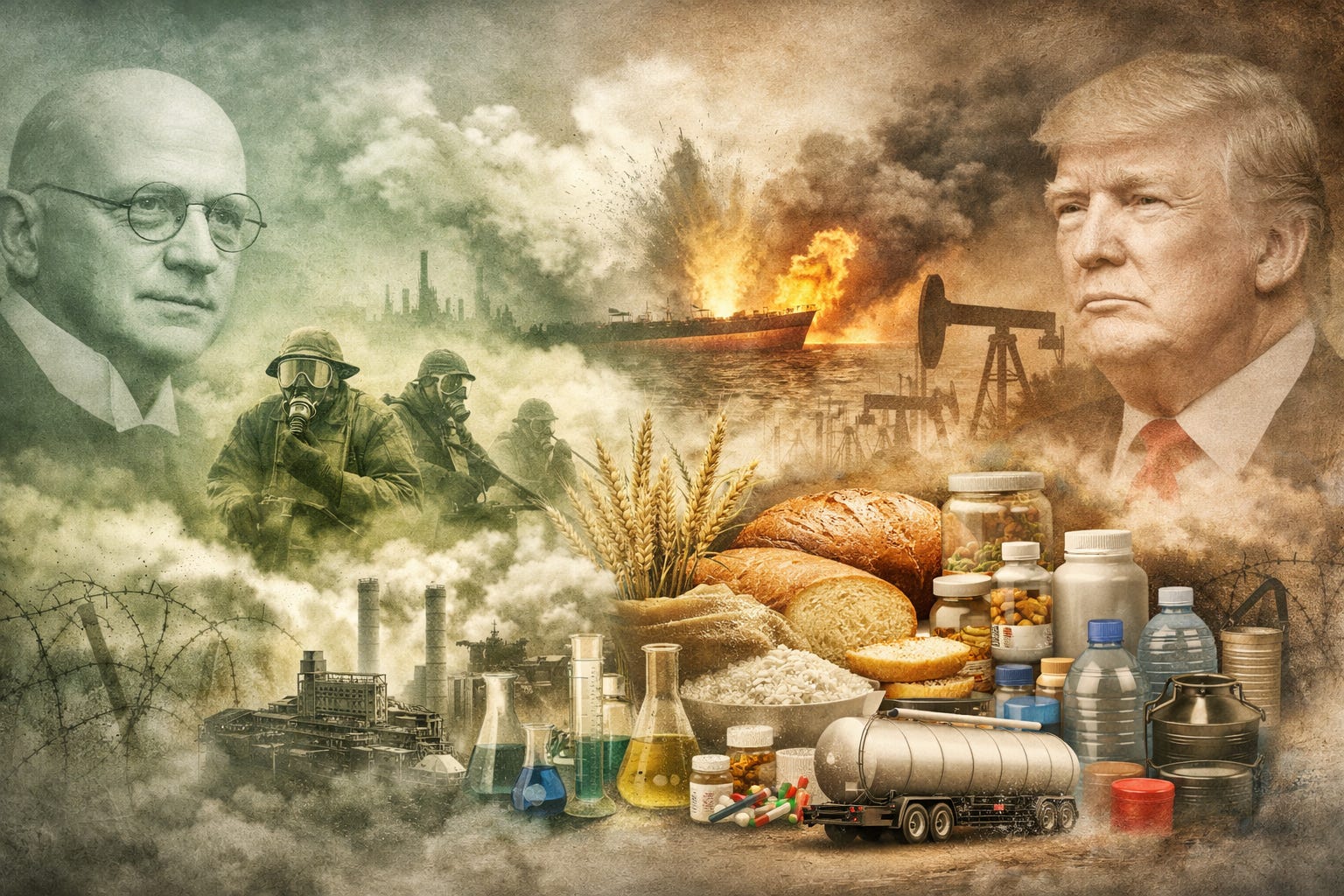
Few figures in history embody humanity’s maze of contradictions more starkly than German chemist Fritz Haber. He won the 1918 Nobel Prize in Chemistry for “making bread from air” and used the same skill to conjure poison gas and feed the machinery of war.
More than a million men were wounded by gas in World War I and it killed nearly 90,000.
Haber pioneered this diabolic slaughter in defiance of international agreements, overseeing the first large-scale use of chlorine gas on the Western Front at Ypres in 1915.
There was a personal toll. His wife, Clara, was also a chemist who was horrified by his work on chemical warfare. In the wake of his grim triumph at Ypres, she took his service pistol and shot herself.
Yet Haber also tackled one of humanity’s most enduring problems: famine.
The historic limit on crop yields was the availability of nitrogen. This essential element is abundant in the atmosphere but is locked in a form plants cannot use. Haber found a way to unlock it, forcing nitrogen to combine with hydrogen under heat and pressure to produce ammonia. The hydrogen comes from natural gas, which also provides the energy to drive the reaction.
The idea was industrialised by Carl Bosch and without the Haber-Bosch process billions would starve. Synthetic fertiliser cannot be made cheaply and at scale without fossil fuel. A century on, we still haven’t found a better way to feed the world.
In 2021 Sri Lanka conducted a demonstration of what not to do by banning chemical fertilisers in favour of organic farming. There followed the decimation of tea and rice crops, food shortages, soaring prices, riots, the resignation of the prime minister, a presidential apology and the abandonment of the fertiliser ban.
Synthetic fertiliser is just one example of where fossil fuel is buried so deep in the sinews of our civilisation that most people do not see it, just as most have no idea that the toothpaste they use and most of the medicines they take are petrochemical products. Oil is also the raw material for plastics, packaging, fabrics and thousands of other everyday products.
Politicians and activists talk as if energy systems can be easily unwound, but we are still bound to them in ways they barely understand. The modern world was built by fossil fuels, runs on them, and replacing them is not a choice we can simply will into existence. If it were easy, someone would already have done it.
Civilisation’s root-and-branch dependence on the continuous flow of hydrocarbons is why nations reeled when the Strait of Hormuz was shut down and, with it, one-fifth of the planet’s supply of oil and gas. The latest Gulf war is a rude awakening as the world of wishful thinking collides with the one we live in. This is the real energy transition, from having abundant, invisible supply to a vivid and punishing awareness of what scarcity might bring.
Australia’s governments are now terrified as they stare into the abyss of the damage a liquid fuel shortage could deliver. Shaken from their sleepwalk, leaders are beginning to understand how profoundly exposed we are. More than 90 per cent of our total energy consumption still comes from coal, oil and gas. Jet fuel, petrol and diesel dominate that mix. Diesel matters most as it drives agriculture, mining and transport, and if it runs out the nation will grind to a halt.
Successive governments have manufactured this scarcity and there is little the incumbents can do at the 11th hour beyond praying that the arteries of supply from Asia are not cut.
We sit at the end of long supply chains, and our energy security rests on an endless procession of ships ferrying oil, petrol, jet fuel and diesel. Every single day deliveries arrive on enormous, slow-moving tankers that creep across the oceans at a pace slower than a car edging through a school zone. Trips from refineries in Singapore and South Korea take between one to two weeks.
The major players in our market are Viva, Ampol, BP and Shell. Each has long-term contracts that secure these deliveries but Asian refineries cannot make fuel if they do not have oil. The risk is refineries run short of fuel to deliver and countries preference their own needs over exports. Talk of China halting shipments of jet fuel sent a shudder through our region.
The fuel shortage in regional Australia was triggered by its reliance on second-tier traders who get fuel from a spot market that dried up almost as soon as the first missile was fired at Iran. And it shouldn’t surprise politicians when some stampede to the bowsers to try to secure fuel when they wake up to the fact the government cannot guarantee it.
The longer the Strait of Hormuz is closed, and more damage is done to Middle Eastern oil infrastructure, the more pressure will build on refiners. The slow march of our fuel trade means there is a lag between a shock at the top of the supply chain and delivery to our market. If we hear of contracted cargoes not being loaded, it will signal that we are about to suffer real pain.
If the Albanese government gets that news, it will have to move to rationing well before our supplies begin to dwindle because we have so little fuel in reserve. There will be a hierarchy of priorities that will probably begin with supplying health and defence, then move to keeping the wheels of transport, agriculture and mining turning. Motorists present a big political problem because no government on Earth wants to suffer the consequences of what cutting their supply would mean. Our newly minted fuel tsar can do little beyond being a central point of contact in the crisis. We cannot distribute fuel we do not have.
For now, the supply ships are still sailing and one of the reasons we have cause to hope that will hold is because of our much-maligned trade in coal and liquefied natural gas. Our region relies on the fuels we ship to secure its energy security. We should be grateful that those who fight to end this trade have, so far, failed because if we undermine the security of those who make our liquid fuel, we cannot expect them to care about us.
Australia faces a witch’s brew of dilemmas, some beyond our control and others of our own making. The long-term danger is that we learn the wrong lessons from this crisis. The biggest mistake would be to believe there is a quick dismount from dependence on coal, oil and gas, and that electrifying everything will deliver energy security.
There seems to be a smug belief among electric vehicle owners that they will dodge any fuel crunch. That feeling may sour as their cars whirr on empty roads to deliver them first to empty supermarket shelves. There is no electric road train on the horizon that could swiftly replace our fleet of diesel trucks. The green hydrogen balloon has burst. There is no scalable replacement for making synthetic fertiliser or most of our medicine. We have yet to invent or scale up the industrial processes we will need to reach the mirage of a carbon-free world.
Our other dilemma is the American President. Remember all those stories fretting that Donald Trump was an isolationist? Would to God it was so. There is no ally on Earth that he has not insulted, few countries he hasn’t threatened, and the list of those he proposes to assault grows by the day. Cuba is the next cab off the rank.
Let’s list the Trump triumphs in the war against Iran so far. On the plus side of the ledger the despotic regime’s leadership has been culled and much of its war machinery damaged. But whoever believed it would fall or that the next supreme leader might not be worse than the last? And what is the incentive to stop fighting and open the Strait of Hormuz when Iran has demonstrated that is its nuclear option? The regime can now teach the world a lesson it will never forget, that an attack on Iran can shake every Western capital.
Continuing down the list of unintended, but not unexpected, consequences of this war, Iran is now selling more oil at a better price than before hostilities kicked off. Alarmed by rising prices at the pump in the US the Trump administration has eased restrictions on Russian oil. Moscow is raking in billions to help fund its war against Ukraine. China has been stockpiling oil for years in preparation for a potential conflict over Taiwan and Iran will continue to supply it as long as it can. Beijing is watching Washington exhaust its weapons inventories and shift assets from South Korea and Japan to the Gulf.
So, what does victory look like? How does Trump dismount? Marines are on their way to the Gulf. If the strait stays closed, they will be sent in and Tehran will have a single, narrow target on which to concentrate its fire.
If those forces move on Kharg Island, the terminal that handles most of Iran’s oil exports, they will be sitting on a hydrocarbon bomb. Would Iran’s mullahs hesitate to detonate it, sending body bags back to America and shockwaves through the global economy? Who can say.
The only certainty is that one day Trump will declare victory as he walks away from this mess, and that he will be as deserving of a Nobel prize as Fritz Haber.
This article was first published in The Australian.
So what is your solution , Chris. Let the mullahs and the Basij forces continue murder Iranians? Just yesterday the few Muslim thugs left in the street kidnapped two young people, gang raped the female, whilst her brother watched. Then they told their father- don’t rescue us, we ask for forgiveness -we will kill ourselves. Some pain to our entitled lives is not a bad thing to try to put a humane government in Iran and cut off the proxies.
Why is there no discussion of developing Australia's oil and vast gas deposits?
Why doesn't the panicked govt allow more exploration drilling and development of our resources.
O yes we have to get to net zero!